
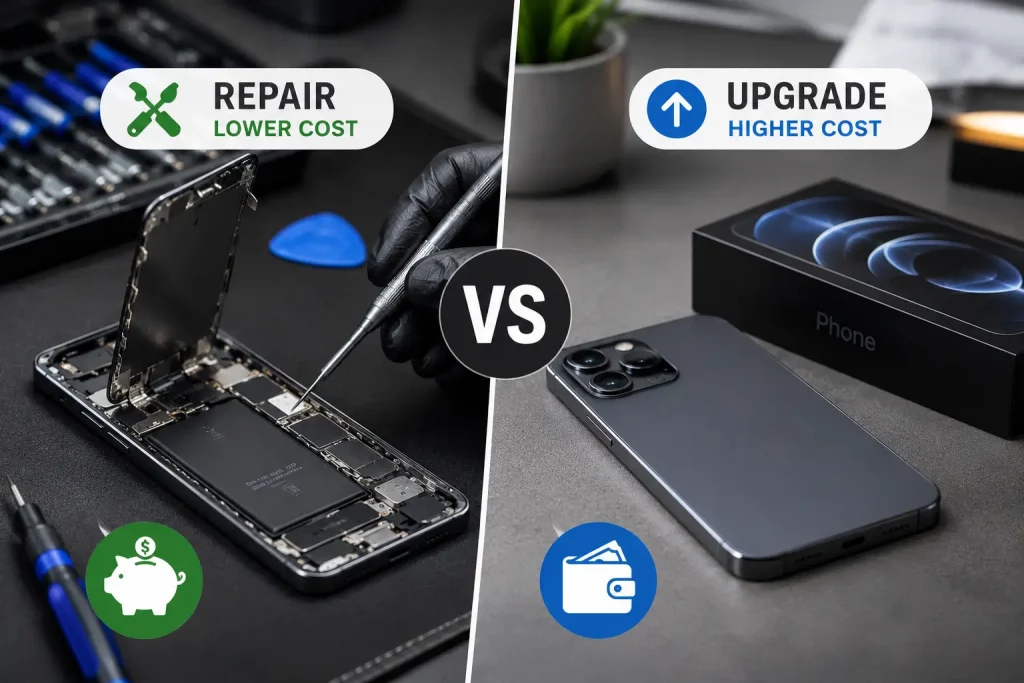
Your phone screen is cracked. Or the battery dies before lunch. Or the charging port only works if you hold the cable at exactly the right angle.
The question that follows is always the same: do I pay to fix this, or do I just get a new phone?
It is a fair question. And the answer is not always “repair is cheaper,” even though it usually is. Sometimes upgrading genuinely makes more sense. The trick is knowing which situation you are in before you spend money.
When Repairing Your Phone Makes Sense
Repair is the better option more often than most people think. The reason is simple maths.
A new flagship phone in 2026 costs between £800 and £1,300. The most common phone repairs cost a fraction of that.
| Common Repair | Typical Cost Range |
|---|---|
| Screen replacement (mid range phone) | £50 to £120 |
| Screen replacement (flagship phone) | £120 to £365 |
| Battery replacement | £40 to £80 |
| Charging port repair | £40 to £70 |
| Camera lens replacement | £30 to £60 |
Even if you needed a screen replacement and a new battery on the same phone, you would likely spend less than £200 to £400 in total. That is still well under half the price of buying new.
Repair makes sense when:
Your phone is less than three years old. A two or three year old phone still has years of useful life left. Modern phones receive software updates for five to seven years, so a phone from 2023 or 2024 is nowhere near the end of its software support.
The damage is limited to one or two components. A cracked screen on an otherwise healthy phone is one of the easiest decisions in tech. The phone works perfectly. It just needs a new display.
The repair costs less than a third of what a replacement would cost. This is a useful rule of thumb. If your phone is worth £600 and the repair is £100, that is an obvious fix. Even at £200, the repair still makes sense.
You want to keep your data where it is. A repair does not wipe your phone. Your photos, messages, apps, and settings stay exactly as they are. Switching to a new phone means transferring everything, which sometimes means losing something along the way.
For a detailed breakdown of screen repair costs specifically, our phone screen repair cost guide covers prices by brand and model.
When Upgrading Makes More Sense
Repair is not always the right answer. There are genuine situations where buying a new phone is the smarter move.
Your phone no longer receives software updates. Once a phone stops getting security patches, it becomes increasingly vulnerable. If the manufacturer has ended support for your model, that is a reasonable time to move on. Most iPhones get updates for six to seven years. Samsung flagships get around seven years now too. Budget Android phones may only get three to four years.
The repair cost is close to the phone’s current value. If your phone is worth £150 on the secondhand market and the repair would cost £120, the numbers stop making sense. You are spending almost as much to fix an ageing device as it is worth.
The phone has multiple serious faults. A cracked screen on its own is a straightforward repair. A cracked screen plus a failing battery plus a damaged charging port starts to add up. When the total bill across several repairs approaches half the cost of a decent replacement, upgrading becomes the more practical choice.
The phone is physically damaged beyond one component. A bent frame, severe water damage that has corroded the logic board, or a phone that has been run over are situations where repair may not be possible at all, or the cost would exceed the value of the device.
The Real Cost of Upgrading
When people compare repair costs to upgrade costs, they often only think about the sticker price of a new phone. But the real cost of upgrading is higher than the price tag.
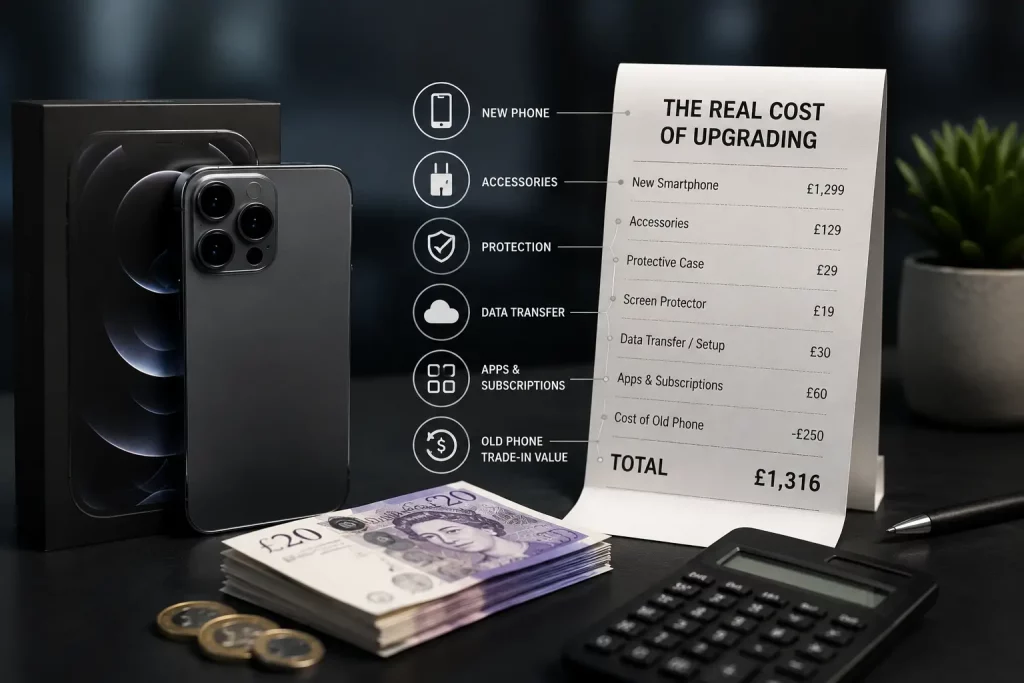
The phone itself. A new iPhone 17 starts at around £799. A Samsung Galaxy S26 starts at around £799. The Ultra and Pro Max models are well above £1,000.
Accessories you already own. Cases, screen protectors, and sometimes chargers need replacing when you switch models. That adds £30 to £80 on top.
Your time. Transferring data, setting up apps, logging back into accounts, and getting a new phone working the way you like it takes hours. Most people underestimate how long this actually takes.
The old phone’s value drops. A cracked phone has a lower trade in value than a working one. If you repair the screen before selling or trading in your old device, you often recover more than the cost of the repair. A phone with a cracked screen might trade in for £50. The same phone with an intact screen might be worth £150 to £200.
When you add all of this up, the true cost of upgrading is often £100 to £200 more than the headline phone price suggests.
The Environmental Angle
This matters more than most people realise.
Manufacturing a new smartphone produces roughly 70 to 80 kg of carbon emissions. That is before it even reaches your hands. Mining the raw materials, assembling the components, and shipping the finished product all carry an environmental cost.
Extending your phone’s life by even one year avoids all of that. It also keeps your old phone out of the growing pile of electronic waste. The UK generates hundreds of thousands of tonnes of e waste every year, much of it from devices that could have been repaired.
Repairing is not just cheaper. It is the lower waste option by a significant margin.
How to Decide: A Quick Checklist
If you are sitting with a damaged phone right now and not sure which way to go, run through this.
How old is the phone? Under three years, repair almost always wins. Three to five years, it depends on the fault and the cost. Over five years, consider whether it still receives security updates.
What is actually wrong with it? Single component damage (screen, battery, port) is a strong case for repair. Multiple faults stacking up pushes the balance toward upgrading.
What would the repair cost? If the repair is under a third of what a new phone costs, repair makes sense. If it is over half the phone’s current value, upgrading starts to look more practical.
Does the phone still get software updates? If yes, it has useful life left. If no, it is reaching the end of the road regardless.
If you are still not sure, you can bring it in to any of our 14 UK stores for a free assessment. We will tell you what is wrong, what it would cost to fix, and whether we think the repair is worth doing. If we do not think it makes sense, we will say so. We would rather give you honest advice than charge you for a repair that is not the right decision.
What Happens When You Choose Repair
If repair is the right call, here is what to expect at Phone Clinic.
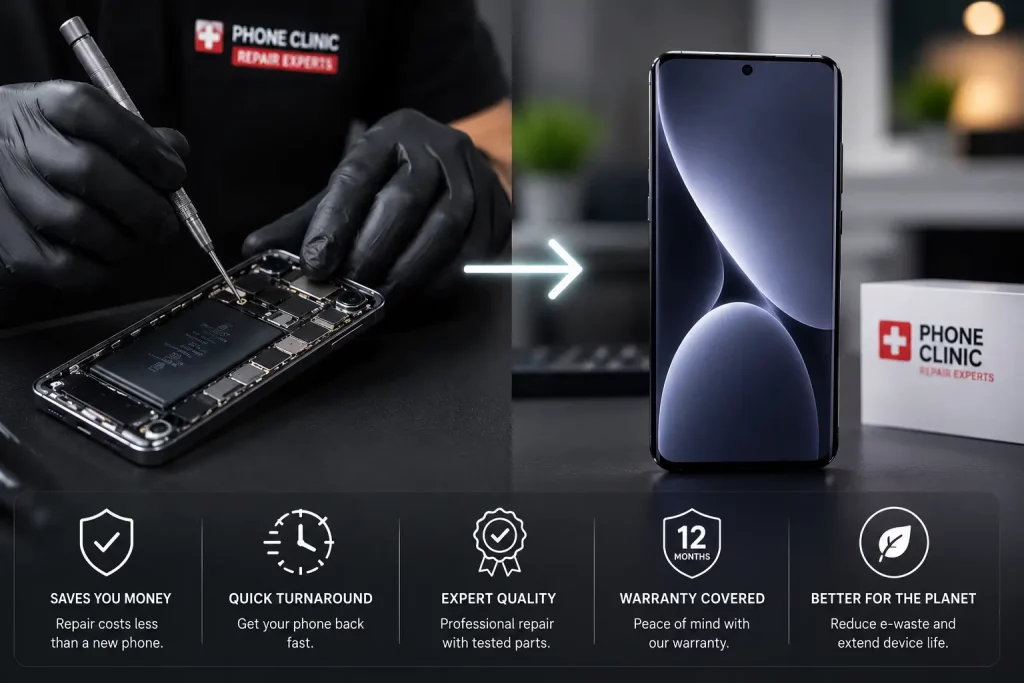
Walk in or book an appointment at any of our stores. Most phone repairs are completed the same day, many within the hour. Your data stays on the phone throughout.
Every repair comes with a warranty. The length depends on the type of repair and the parts used. Screen repairs are covered for up to 12 months with an OLED screen, and small parts like charging ports and cameras are covered for 12 months. Full details are on our warranty page.
Our no fix, no fee policy means you do not pay if we cannot fix the problem. There is no risk in having the phone assessed first.
What If You Decide to Upgrade?
If upgrading is the better option for your situation, there is one thing worth doing before you buy a new phone.
Get the old one repaired before you sell it or trade it in.
This sounds counterintuitive, but the maths works in your favour. A cracked iPhone 16 might trade in for £100. The same phone with a new screen might trade in for £300. The screen repair costs £120. You have just gained an extra £80 by repairing before selling.
It is a small investment that puts money back in your pocket toward the new phone.
Frequently Asked Questions
Is it worth repairing a phone with a cracked screen?
In most cases, yes. A screen repair on a phone that is less than three years old costs a fraction of what a new phone costs and gives you back a fully working device with all your data intact. It only stops being worth it if the phone has multiple other faults or is no longer receiving software updates.
How do I know if my phone is too old to repair?
The clearest sign is whether it still receives software updates. If the manufacturer has ended security patch support, the phone is becoming a security risk regardless of its physical condition. Most iPhones get updates for six to seven years. Samsung flagships get around seven years. Budget Android phones may only get three to four years.
Does repairing my phone void the manufacturer warranty?
In the UK, having your phone repaired by an independent shop does not automatically void the entire manufacturer warranty. Under UK consumer law, a manufacturer can only refuse warranty coverage for a specific fault if they can prove the third party repair caused that fault. They cannot void the warranty on unrelated components.
Is it cheaper to repair a phone or buy a new one?
For single component damage like a cracked screen, a dead battery, or a faulty charging port, repair is almost always cheaper. Even on a flagship phone, a screen repair rarely costs more than a third of the price of a new device. Upgrading only becomes cheaper in relative terms when the phone has multiple faults and the combined repair bill approaches the phone’s current value.
What is the most common phone repair?
Screen replacement is by far the most common phone repair. Cracked screens account for the majority of devices we see at Phone Clinic. Battery replacement is the second most common, followed by charging port repairs.