
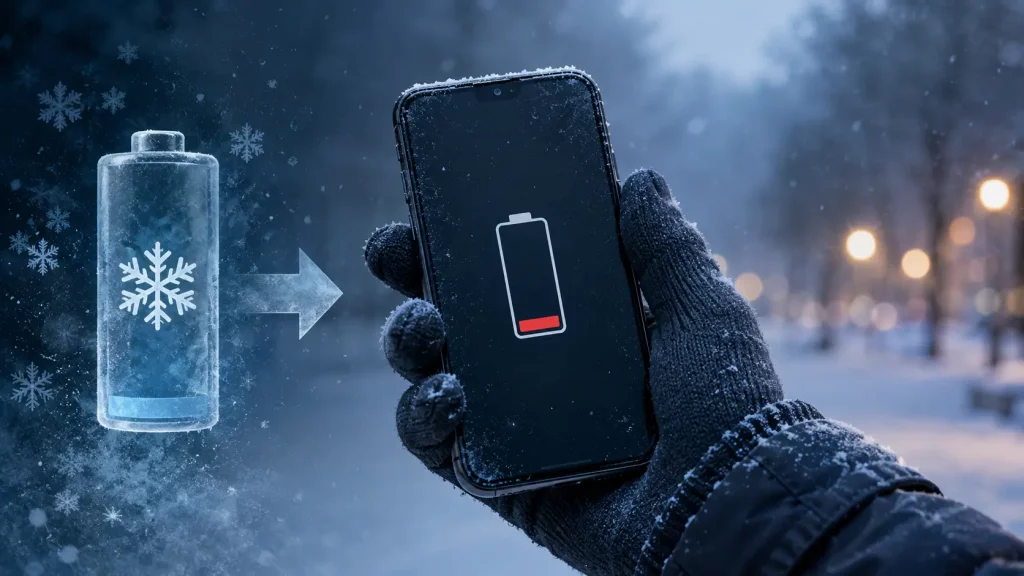
You walk outside on a freezing morning, pull your phone out, and watch the battery drop from 40% to dead in minutes. It is not broken. It is not a fault. It is chemistry.
Cold weather is one of the most common reasons people think their phone battery has failed. The good news is that in most cases, the drain is temporary and your phone will recover once it warms up. But there is one winter habit that most people do not know about, and it can cause permanent battery damage.
What Cold Does to Your Battery
Your phone runs on a lithium ion battery. Inside that battery is a liquid electrolyte that allows lithium ions to move between two sides of the cell. That movement is what creates the power your phone runs on.
When the temperature drops, that liquid gets thicker and more resistant. The ions have to work harder to move through it. Think of it like trying to pour honey straight from the fridge compared to honey at room temperature. The energy is still there, but it cannot flow as easily.
This means your battery cannot deliver power as efficiently. Your phone detects the lower voltage and reads it as a lower charge, even though the actual energy stored in the battery has not changed much. That is why your phone can show 30%, shut down in the cold, then come back to life at 25% once it warms up indoors.
At What Temperature Does It Start?
Most phones start showing reduced battery performance below 10°C. Below 0°C, the effect becomes much more noticeable. Apple says iPhones are designed to work in temperatures between 0°C and 35°C. Samsung gives a similar range.
In a typical UK winter, temperatures regularly drop to 0°C to 5°C overnight and on cold mornings. If you are outdoors for extended periods, working outside, running, walking the dog, or waiting for a bus, your phone is exposed to temperatures that will affect its battery.
The One Habit That Causes Permanent Damage
Most cold weather battery drain is temporary. Your phone recovers once it warms up. But there is one thing that can cause lasting, irreversible damage.
Charging a freezing cold phone.
When you come inside from the cold and immediately plug your phone in, the battery is still at a very low temperature. Charging a cold lithium ion battery causes a chemical reaction called lithium plating. Instead of lithium ions moving smoothly into the battery’s anode, they deposit unevenly on the surface. This permanently reduces the battery’s capacity and can even create internal short circuits over time.
The fix is simple. When you come inside from the cold, wait 15 to 20 minutes before plugging your phone in. Let it warm up to room temperature first. This one habit protects your battery from the only type of cold weather damage that is permanent.
Cold Weather vs a Dying Battery
This is the important distinction. Cold weather drain is temporary. A dying battery gets worse over time regardless of temperature.
Here is how to tell the difference.
| Cold Weather Drain | Dying Battery |
|---|---|
| Phone recovers once it warms up indoors | Battery life is poor even in warm temperatures |
| Only happens on cold days | Happens every day, all year round |
| Battery percentage returns after warming | Battery percentage never recovers |
| Phone has been fine during warmer months | Battery life has been getting worse for months |
| Battery health is above 80% | Battery health is below 80% |
If your phone drains quickly even when you are indoors and the temperature is normal, the problem is not the cold. The battery itself is degraded and needs replacing. Our guide to 8 signs your phone battery needs replacing walks through exactly how to diagnose this.
How to Protect Your Phone in Cold Weather
These tips will keep your phone running longer during winter.
Keep it in an inside pocket. Your body heat keeps the phone warm. An outside jacket pocket or a bag gives no warmth and leaves the phone exposed to the cold.
Use a case. A thick case acts as insulation and slows heat loss. It will not keep your phone warm forever, but it buys you extra time in the cold.
Turn on Low Power Mode before you go out. Do this while the phone is still warm, not when it hits 20%. Low Power Mode (iPhone) or Battery Saver (Android) reduces background activity, dims the screen, and limits the processor. This means the battery has less work to do, so it lasts longer in the cold.
Reduce screen brightness. The screen is the biggest battery drain on any phone. Turning it down in cold weather gives you more time before the phone dies.
Avoid using the camera in extreme cold. The camera uses a lot of power, especially video recording. If you are taking photos or videos in freezing temperatures, keep the phone warm between shots.
Do not charge it while it is still cold. Wait 15 to 20 minutes after coming indoors before plugging in. This prevents lithium plating and protects long term battery health.
Carry a power bank. If you are going to be outdoors for a long time, a fully charged power bank gives you a backup. Keep the power bank in an inside pocket too, since they are affected by cold in the same way.
Do Specific Phones Handle Cold Better?
All phones with lithium ion batteries are affected by cold. But some handle it better than others.
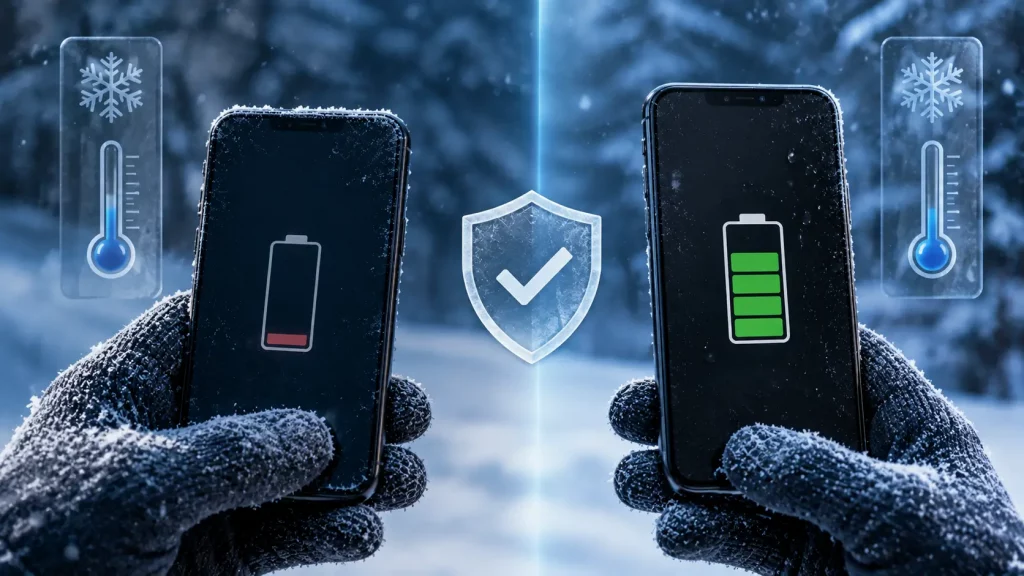
iPhones tend to shut down more aggressively in the cold because Apple’s power management is stricter. The phone would rather turn off than risk running the battery at dangerously low voltage. This protects the battery but is frustrating when you need the phone.
Samsung and other Android phones may drain faster without shutting down, which keeps the phone usable but can stress the battery more in extreme cold.
Rugged phones and outdoor focused models often have better cold tolerance because they use thicker batteries and better insulation. If you work outdoors regularly, these are worth considering.
Does Cold Weather Permanently Damage Your Battery?
No, not on its own. The temporary drain you experience on a cold day does not reduce your battery’s long term capacity. Once the phone warms up, the battery works normally again.
The only permanent damage comes from charging a cold battery (lithium plating) or from extreme cold causing the electrolyte to freeze, which would require temperatures well below what the UK normally experiences.
If your battery seems permanently worse after winter, it is more likely that the battery was already degrading and the cold just made it obvious. A battery health check will confirm this. If the health is below 80%, a replacement will fix the problem. See our iPhone battery replacement cost guide for pricing.
Frequently Asked Questions
Why does my phone die in the cold?
Cold temperatures thicken the electrolyte inside your battery, making it harder for power to flow. Your phone reads the lower voltage as an empty battery and shuts down to protect itself. The charge is usually still there and the phone recovers once it warms up.
Can cold weather permanently damage my phone battery?
The cold itself does not cause permanent damage. But charging a freezing cold phone can. Wait 15 to 20 minutes after coming indoors before plugging in.
Why does my phone show 30% then shut down in the cold?
The battery cannot deliver enough voltage in cold temperatures, so the phone shuts down even though charge remains. This is a temporary effect and the phone will recover after warming up.
Does Low Power Mode help in cold weather?
Yes. Turning it on before going outside reduces the power your phone needs, so the battery lasts longer in the cold.
Is my phone broken if it dies in the cold?
Probably not. If it works normally in warm temperatures, the cold is the cause. If the battery drains fast even when warm, the battery itself is degraded and may need replacing.
Should I buy a new battery if my phone dies in winter?
Only if the battery drains quickly in warm weather too. Check your battery health in settings. If it is above 80%, the cold is the cause and no replacement is needed. If it is below 80%, a new battery will help.